
Midwifing the Dream
Winter Solstice Dreamings

A Chairde, Friends,
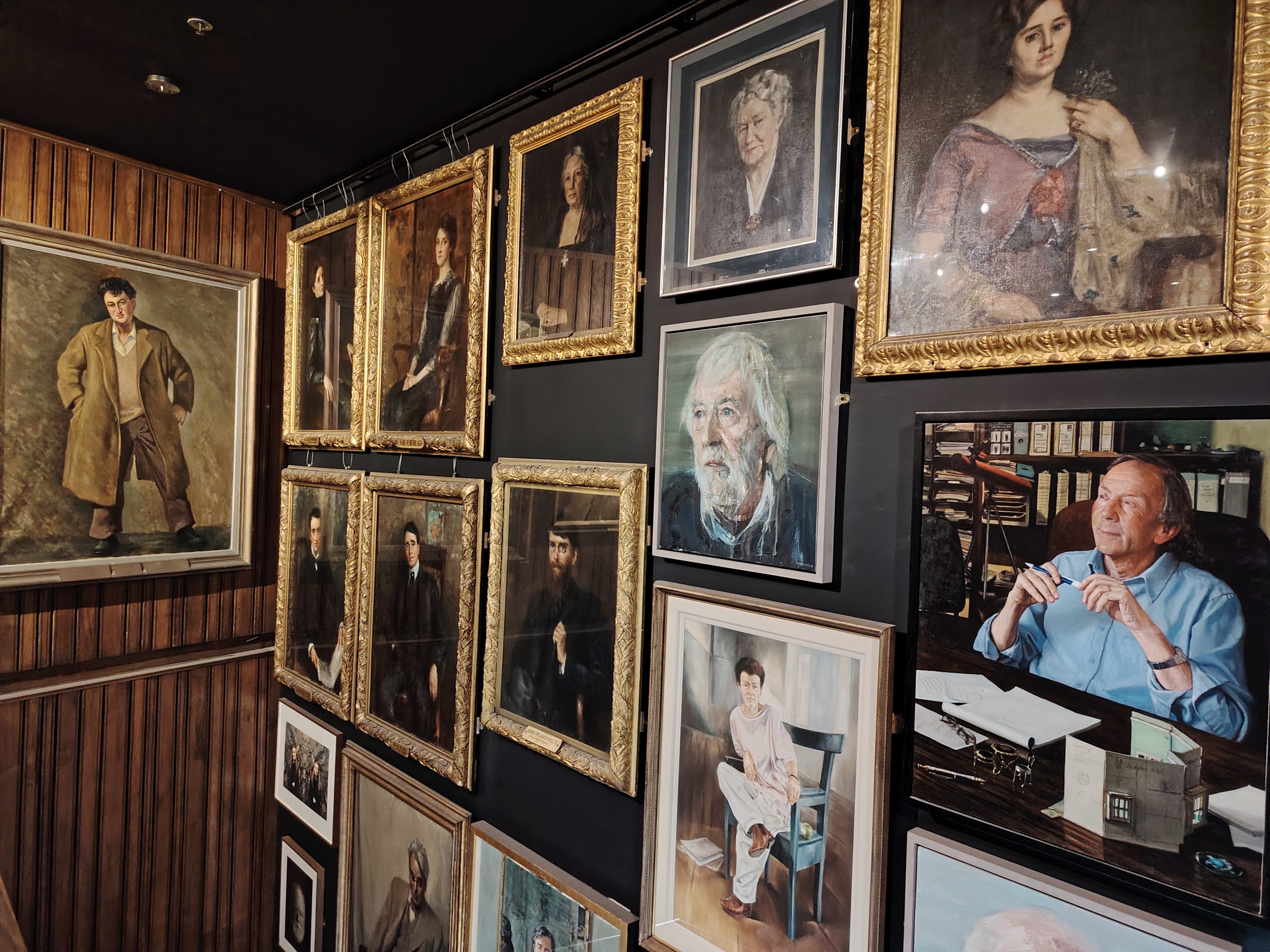
Last night, I celebrated the winter solstice in a different way than usual. I went to see Dublin Gothic at the Abbey Theatre, written by Barbara Bergin and directed by Caroline Byrne. Over a three-hour performance, we journeyed through 100 years of Dublin city life through cycles of empire, poverty and pox, the 1916 Rising, church as coloniser of the free state, through to the 1980s and rolling waves of emigration. It asked, what does it mean to be a Dubliner and to continue to love your city as an act of rebellion in the face of its horrors, and the everyday unnoticed apocalypses in people’s lives? It reminded me that love is a form of homecoming - to place. Wherever or whatever that place may be.
Dream Midwifery
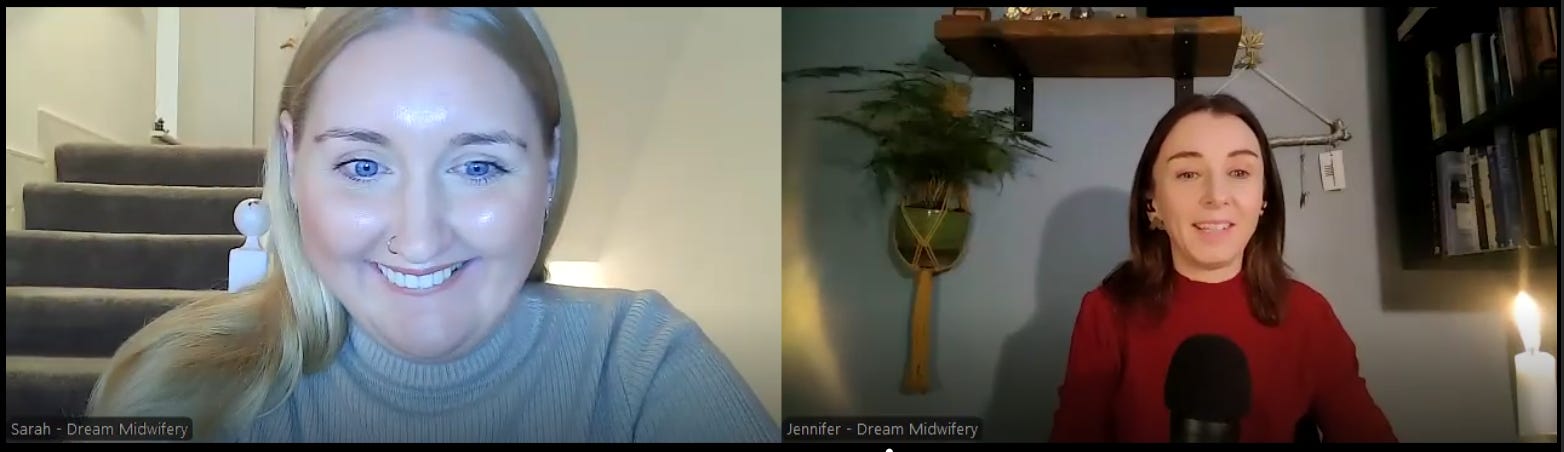
The more that I come home to myself, the more I attune to the energy of my work and the places it wants to go, and so I’m proud to share in the dreamtime of the solstice, a new co-creation with my anam chara, Sarah Richardson called Dream Midwifery. This brings our skills as mythologist and midwife together to support our collective homecoming into a fuller expression of our dán (“dawn”), our soul’s calling, our creative destiny - the unique meaning that you, simply by being you, bring to our world.
We’re beginning with a three-part podcast series next Sunday, 28th December, with episodes dropping on Sundays thereafter, generating sacred space for your ‘Sunday Service’, your church, your stone circle, your fairy mound - your Dream Midwifery temple.
I can’t wait to share more with you.
Soul’s Homecoming
Last solstice, I shared a piece on how the location of the winter solstice in the star temple of Newgrange acts as a homecoming for the soul. A year later, this feels ever more present, and so it’s time to cycle back into the womb of the ancestors…
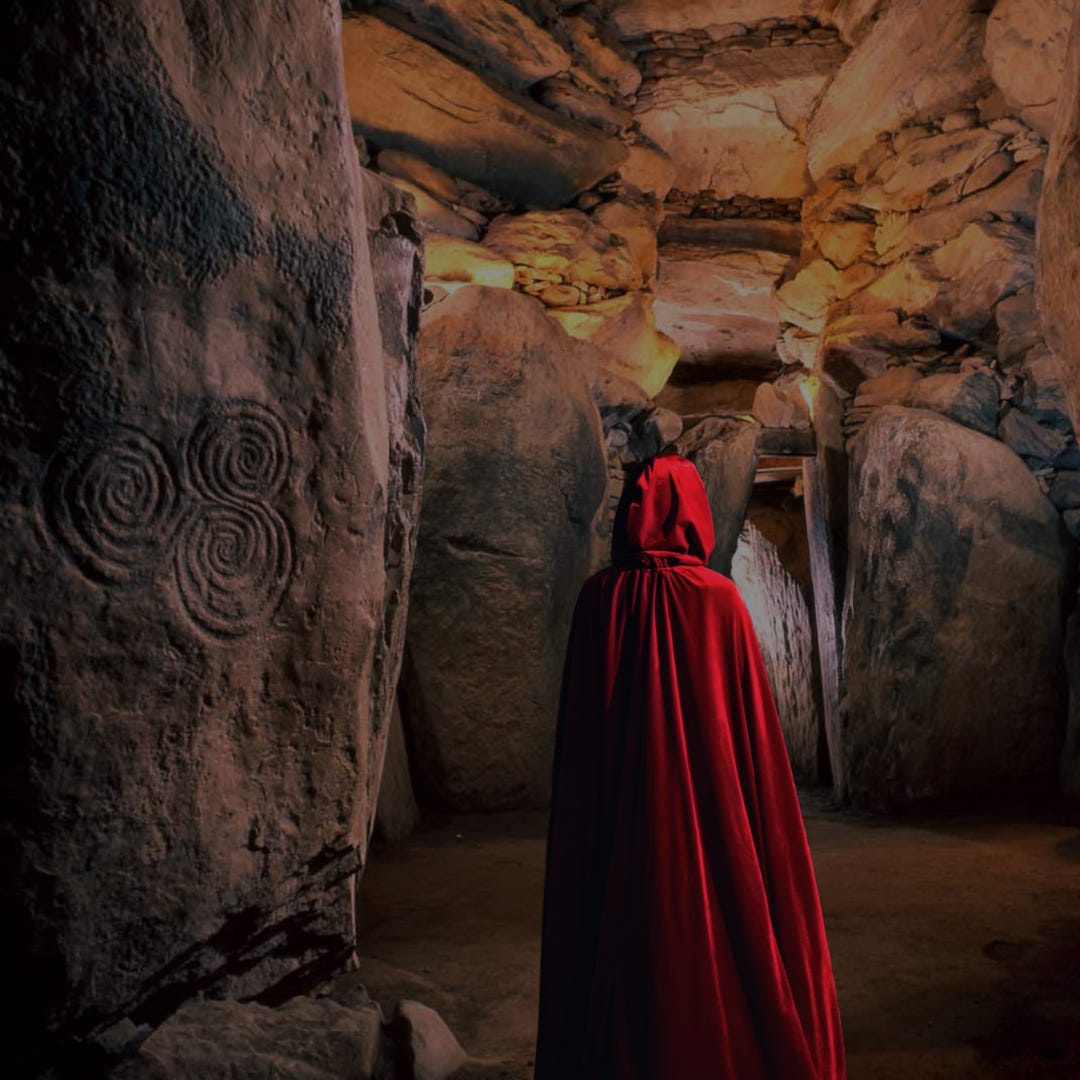
When you look at Newgrange from outside on the land, you see a mandala in the sense of a ‘sacred circle’. Its mound rises up from the green flesh it is embedded in. A round green belly is decorated with 97 kerbstones, many of which display exquisite carvings connecting earth with cosmos. Above these stones is a ring of white quartz that glistens under solar and lunar rays. At the peak is an earthen swell, a pregnant womb adorned for birth.
Newgrange and its sister temples, Knowth (Cnoc Buí, ‘Hill of the Goddess Buí’) and Dowth (Dubad meaning ‘growing dark’ or ‘blackening’) are known collectively as Brú na Bóinne, ‘Womb of the White Cow’ in Irish. Brú is most commonly translated as ‘mansion’ but in Old Irish, it also means ‘womb’ or ‘belly’. Bóinne, then, is of the ‘White Cow’, the goddess Bóinn, known in English as the River Boyne whose banks hold Newgrange.
Newgrange itself is known as Sí an Bhrú (or Sid in Broga). Sí is an Irish word that describes both the gods themselves - and the fairies - and their dwelling place, because the divine, nature and place cannot be separated in Irish mythos. Again, we have brú here meaning womb, so in a sense Newgrange is a womby abode to the divine.
Where the Divine Lives
The divine lives in Newgrange in the form of Óengus Óg (‘Young Aengus’), the god of love of the Tuatha Dé Danann, son of Bóinn and the Dagda. In this time of the winter solstice, the longest night of the year, the deepest dreaming time, we remember Óengus as a god who dreams. Night after night, he has an aisling, a ‘dream-vision’ where a woman appears to him playing a timpán (a type of lyre), but vanishes in the morning when the waking world rises. Óengus is so overcome with desire and grief that he gets a wasting sickness (serglige) and descends into a dark night of the soul.
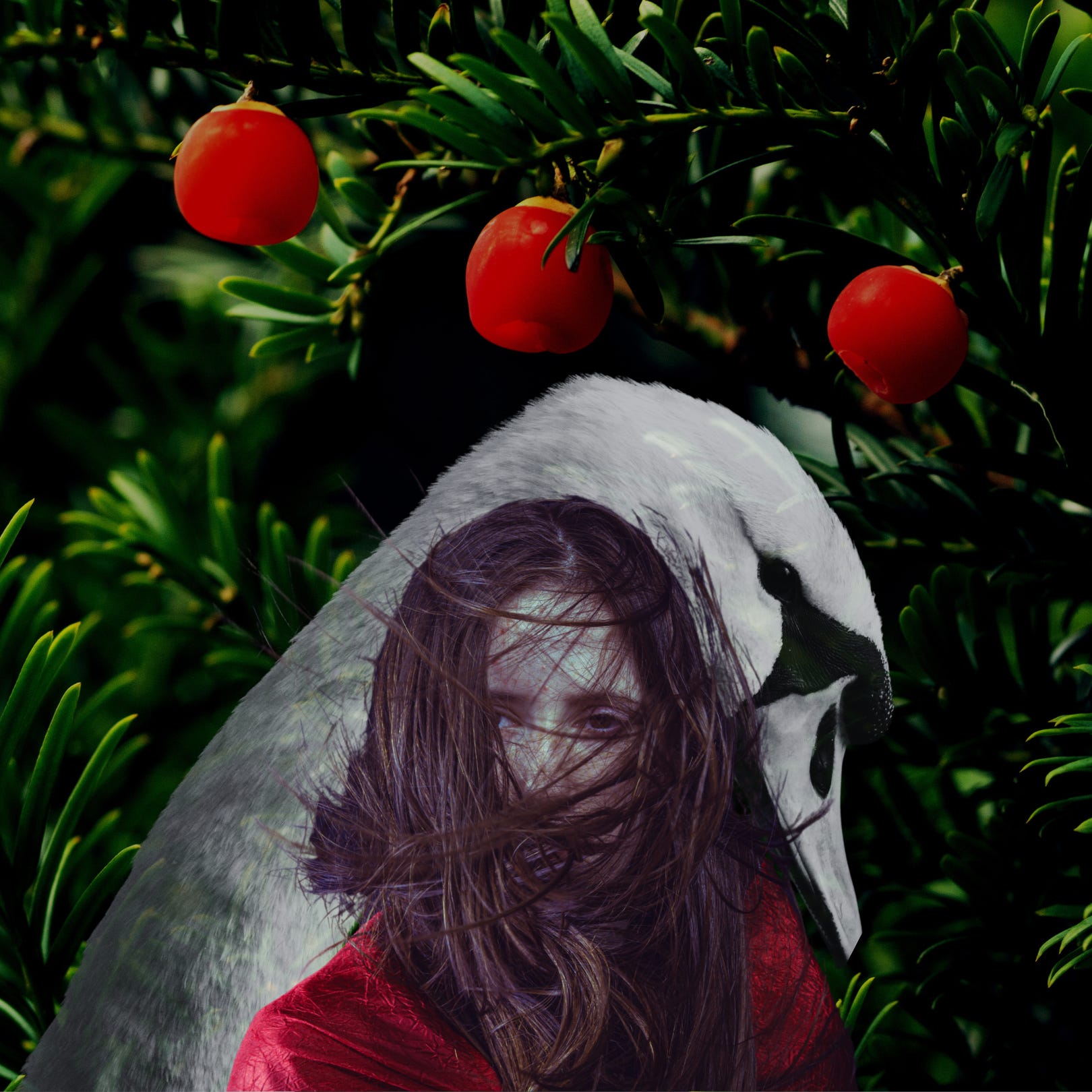
After a long shift in the void, and with the help of his loved ones and guides, Óengus learns who the mystical woman is. Her name is Caer Ibormeith, meaning ‘of the yewberry’, the yew tree being a symbol of death, rebirth and eternity. She is a shapeshifter; each year at Samhain she shape-changes, spending every alternate year as a woman or a swan. Óengus goes to the Lake of the Dragon’s Mouth where Caer accepts him if he consents that she can always return to the water. Óengus then transforms into a swan and the lovers circle the lake for three days and three nights.
Coming Home
For me, Caer is symbolic of the soul. Caer comes to Óengus in a dream and ‘naturally, dreams are the messengers par excellence from the unconscious’1; they open the channel to dialogue with our soul. This glimpse of his soul causes a necessary disintegration in Óengus of his old ways (an alchemical nigredo) so that a new consciousness can emerge, one that is soul-led. Óengus has to transform, and he does, while also recognising, as Caer insists, that the soul must always be able to move between this world and the waters of the unconscious.
After their three nights on the lake, the pair fly to Newgrange. The music induced by their wings is so mesmerising that everyone beneath their flight path falls into a spellbound sleep. It is at Newgrange that the union with the soul, of Óengus with Caer, is anchored and eternally embodied. It is their great ever-after homecoming
Sin é, that’s it, I wish you every blessing this solstice. While the energy is high, why not enter the Irish government’s 2026 Newgrange Winter Solstice Lottery and you may find yourself in the womby home of Óengus and Caer for the solstice sunrise this time next year.
Croí isteach,
Jen
Encounters with the Soul: Active Imagination As Developed by C.G. Jung by Barbara Hannah
Thank you. What a rich and beautiful mythology. I hope to visit some of these sites someday. Wishing you a merry midwinter x
🤍🤍🤍✨🦢🦢